



Victoria, Victoria by Askold Melnyczuk
In May 2014 filmmaker, writer, and activist Oleh Sentsov, an ethnic Russian and a citizen of Ukraine was arrested in Crimea for protesting Russia’s annexation of the peninsula. Tried in Moscow, where he was tortured and threatened with rape, he was given a twenty-year sentence for terrorism and sent to a penal colony along the Arctic Ocean. For years, various human rights organizations worked to free him. International film-makers Pedro Almodovar, Mike Leigh, Ken Loach and Agnieszka Holland, among others, wrote to Russian authorities urging that he be released and allegations of torture investigated. The European Parliament awarded him the Sakharov prize in 2018. In 2019, the writer’s organization, PEN America, decided to sponsor a vigil protesting his detention in front of the Russian Embassy in New York. The head of PEN’s Freedom to Write committee invited me to join the reading.
On the bus from Boston to Manhattan I read a little more about Sentsov whose first film was based on J.D. Salinger’s classic story, “A Perfect Day for Bananafish.” First published in The New Yorker in 1948, the story might seem a curious choice of material for a young filmmaker in Crimea. It’s about Seymour Glass, a World War II vet on vacation in Florida with his socialite wife. On the beach, Seymour meets a young girl with whom he has a strange conversation. Soon after, he goes up to his room, takes a pistol, and shoots himself.
Salinger makes no effort to establish a causal link between the story’s events. It only begins to make sense when you glean the subtext: Seymour is unable to adjust to the trivialities of civilian life after surviving the gruesomeness of industrial warfare. Salinger himself had helped liberate a concentration subcamp at Dachau. How do we come to terms with a world home to such horrors alongside such innocence?
As the bus crossed the East River, I thought about all those Sundays in my childhood when my parents drove my sister and me from our home in New Jersey to New York to march in front of the UN to protest yet another Russian crackdown on Ukrainian “dissidents.”
Arriving outside the Russian Embassy on East 91st Street, I noted there were only a handful of us, including then PEN president Jennifer Eagan and Soviet-born novelist Gary Shteyngart. Standing there, I remembered how, in the old days, hundreds of emigres would have assembled to chant and grieve the friends and family from whom they’d been separated.
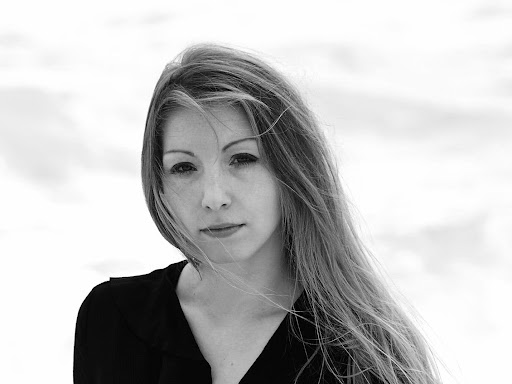
One of the other readers was a striking, elegantly dressed young Ukrainian woman with long dirty-blond hair, large dark eyes, sensitive lips and a high forehead whose name I didn’t catch when she introduced herself. Each of us read a passage of prose or a poem lasting no more than three or four minutes. Then, in a blink, it was over. We in the free world had done all we could on behalf of those suffering in a 21st century Gulag. We were free to go. There were no journalists present, no cameras, no media at all. When the tree fell in the forest, not even the owls were around to hear it.
As we began dispersing, I approached the young woman and introduced myself. Victoria Amelina smiled slyly, saying that she knew who I was. We had friends in common back in her native Lviv. It turned out we shared a Ukrainian publisher. I discovered Victoria was living in Brookline with her son and husband who worked for an American IT company. We chatted a few minutes about what was happening in Ukraine and agreed to meet for coffee when we returned to Boston. We then went our separate ways.
A few weeks later we met at the Fogg Museum in Cambridge. The space, recently redesigned by the architect Renzo Piano, brags a sixty-foot atrium under a spectacular glass canopy Piano named the Light Machine, even though the “machine” emitting the light is none other than the sun. Hanging from the ceiling is gigantic mobile built of chrome-plated steel triangles by Mexican artist Carlos Amorales. It’s a spectacular setting. If you sit at a corner table and crane your neck a little, you can see a self-portrait by Van Gogh, its swirling green background giving the painter’s face an unsettling intensity as his eyes drill into you. What is he thinking?
That afternoon, however, Victoria had my full attention as she told me about her recent trip to Tibet. She spoke softly, with a natural warmth, a disarming confidence and a ready smile. She was entrancing: open, spontaneously eloquent, funny, empathic, self-effacing. She told me she’d studied computer science and started her career working in IT where she’d been a successful manager before giving it up to write full-time. She’d been in Boston for over a year.
She then asked me about local places to meditate. I told her about the Insight Meditation Center on Broadway.
I was editing an online journal and I invited her to contribute something. One of the pieces we published, “Nothing Bad Has Ever Happened,” described how, in Soviet days, the residents of Lviv, most of whom had settled there after the war, knew little or nothing of the city’s earlier history. Few bothered asking why the city suddenly had so many empty apartments. They knew–or pretended to know–little or nothing about how the city’s Jewish population had shrunk from about 110,000 souls before the war to under a thousand.
One afternoon I invited Victoria, along with other contributors to the journal, all of whom hailed from different parts of the globe–from Nigeria, France, Iran, California, Ukraine, and New Jersey–over for coffee and a conversation about home. Each person spoke about what had brought them to Cambridge. Some had fled politically repressive regimes, others had come to attend one of the region’s 70 institutions of higher ed, others had come for work, and a few for love. None of us matched the enthusiasm with which Victoria spoke about the native city she missed daily. Being part of a generation determined to unearth its buried history gave her a sense of mission.
A week later COVID struck, reorienting all our lives. Soon after, Victoria and her family returned to Ukraine. We emailed occasionally and she continued to contribute to the journal.
When war began on February 22nd, 2022, Victoria was traveling in Egypt with her son. She decided to return to Ukraine immediately. After moving her mother to Krakow, and leaving her son in her mother’s care, Victoria herself moved to Kyiv.
As the war ramped up, she put her own work on hold and instead turned her attention to documenting women documenting war crimes for an organization called Truth Hounds. She learned how to interview women who had been raped and people who had been tortured. It turned out she was good at it. She knew how to listen and people trusted her instantly.
The gratuitous carnage committed by the Russian soldiers horrified her and she began looking more deeply into the ways in which the perpetrators might eventually be held accountable. Questions of justice preoccupied her. She began studying the work of Hersch Lauterpacht, before the war a professor of international law at the same University in Lviv where my mother had studied, and Raphael Lemkin, the lawyer who coined the term, and defined the crime, of genocide. Lauterpacht had elaborated a slightly broader concept, “crimes against humanity,” which he defined as “inhumane acts committed against civilians,” including murder, torture, enslavement, and deportation, which may be committed during war or peacetime. Lauterpacht’s influence on the Nuremberg trials was profound and his work remains a defining pillar of international jurisprudence. Victoria’s immersion in the material led her to a public conversation on the subject with the French/British specialist on international law, Phillipe Sands, best known for his book East West Street: On the Origins of Genocide and Crimes against Humanity. The nuances of the legalisms were as fascinating as the fact that they were rarely acted on was farcical.
Nevertheless, Victoria was determined to be sure the international courts had all the evidence they needed to prosecute the perpetrators of the war.
While accurate numbers are impossible to determine, recent studies suggest somewhere between 40 and 100,000 Ukrainian soldiers have been killed in action, with over 400,000 wounded. Estimates of the number Ukrainian children abducted to Russia range between 20,000 and 120,000. Writing in the spring of 2024, human rights lawyer and co-recipient of the Nobel Peace Prize Oleksandra Matviichuk and her organization, the Center for Civil Liberties, have documented some 72,000 war crimes. Since then, the number has been revised to upward of 150,000. Surely such atrocities could not go unpunished. Victoria was determined to see justice done.
So many of us have mouthed pieties about “never again.” We’ve genuflected at the altars of Orwell and Camus, Weil and Sontag in theory. It made us feel good to align ourselves with these heroic figures in theory. What does our respect for such figures and our allegiance to the values they embody look like in practice? That is the question this war has summoned us to answer.
***
August 1990: I’m sitting in the glass-enclosed waiting room of the train station in Warsaw, on my way to Przemysl, the city from which my family fled to the west in 1944. A wall-mounted color television broadcasts a celebration marking the tenth anniversary of Solidarity. On the screen, broad-faced Lech Wałęsa in a tux kisses children and waves at the camera.
It’s late and my immediate company consists mainly of drunks and the homeless. Many of them, I’ve been told, used to work for the secret police. Men and women sprawl over benches, on the floor. Bottles are passed, slurred anthems sung. Splenetic laughter. Angry words. The scene is Dostoevskian. The men are unshaven and ragged, the few women shrill and disheveled. Everyone is smoking, including me.
I alone watch the TV. Some thirty feet below, on the main floor of the station, rival punk gangs swarm against each other. Fights break out. The countless police patrolling the place seem nonplussed. They glance at the brawlers and look away. Outside, shots are fired. The cop sitting across from me refuses to look up from the detective magazine he’s immersed in.
I am thirty-five. My personal life is in shambles. I’m broke—or will be, after this trip. My ex-fiancé is returning to Medellin to resume her medical practice. My parents and I hardly speak. For this, as for so many things, I blame the Old World. And now I’m finally going to face it head on.
My nerves are pulled tight less by the swirling marauders around me, and more by the thought of where my train’s about to take me: the next stop is Przemysl, where my mother was born and where my parents lived the key dramas of their lives, which led to their becoming refugees, their migration to the United States, their eternal restlessness and unrelenting struggle to win back the right to return to their home. At the altar of that longing for the past they sacrificed everything, including, I felt, their children, forever yoking them (my sister, me) to events and a history we could only know second-hand. When they left the city, in 1944, it was still divided between the Nazis and the Communists. Who lived there now? And what about the family my parents left behind?
Let me be clear: I am not looking for home. I know where I was born (New Jersey, twenty miles south of NYC), and that my home is wherever I find myself. The rest’s adventitious, details.
Okay, it’s not quite as simple as that—geography matters, surely that much I know.
Another gunshot outside; another brawl on the floor of the station. And then an announcement: my train has been canceled. The next doesn’t leave for six hours.
Forty-five years have passed since my parents headed west; I’m prepared to wait. After all, the story I’m trying to understand began even earlier, long before I was born. Isn’t it true for us all? The contexts into which we are born are shaped entirely by others–by, if you will, history. “A man’s name,” wrote Marshall McLuhan, “is a blow from which he can never recover.” The best we can do is adapt. Or rebel.
Earlier that summer,1990, out of the blue, I had received an invitation to attend a poetry festival in Kyiv. I have no idea who in Ukraine knew of my existence, but the offer was irresistible.
I accepted immediately and set about preparing. The Soviet Union was still a year away from dissolving. Traveling there required making special arrangements in conjunction with the official state travel agency, In-tourist, through which one booked hotels and trains. The State wanted to know where you’d be every day of your stay.
It was also a time of considerable material deprivation. Jeans were prized, as were Bic lighters and cartridge pens. I stocked up.
I wanted to see Lviv, the city in Western Ukraine where my mother and grandfather went to university and where my grandmother is buried, as well as my father’s home city of Chernivtsi, best known as the birthplace of Paul Celan and Aharon Appelfeld, but also home to the Ukrainian writer Olha Kobylianska and the Austro-Italian novelist Gregor von Rezzori who commemorates it in his memoir, The Snows of Yesteryear. I planned to visit Odesa, with its gilded literary reputation thanks to the stories of Isaac Babel, whose Guy de Maupassant contains some of the best writing advice anywhere: “When a phrase is born, it is both good and bad at the same time. The secret of its success rests in a crux that is barely discernible. One’s fingertips must grasp the key, gently warming it. And then the key must be turned once, not twice.” And: “No iron spike can pierce a human heart as icily as a period in the right place.”
I’d then travel to Kyiv for the festival.
And I did. There I said a silent prayer at the grave of the poet Taras Shevchenko just outside the city. Above all, I met a score of wonderful people, writers young and old, most of whom were passionate, open and eager to engage with the world from which they had been cut off for more than half a century. They were remarkably able to laugh off the tragedies of the past without ever denying the brutal history by which their native land has been marked. I met Mykola Rudenko, a poet on whose behalf I’d written letters to American politicians and various human rights organizations fifteen years earlier while he was moldering in Siberia. Some of the younger poets and novelists, who were just starting out back then—Oksana Zabuzhko, Yuri Andrukhovych, and others–became friends. They also grew into the leading writers of their generation.
I saw all I’d hoped to see, and more—I brushed the moss off my grandmother’s grave and photographed the house where my father was born. I gave a reading at the Opera House in Lviv where my mother used to attend concerts. There I also met my cousin and childhood pen pal, Zenon Kuzimkiv, and his lovely wife Vera. At the time they lived in a small apartment in one of the discouraging gray high rises constructed during the Khrushchev era. They later visited the United States, overstaying their visa by a year in order to earn some money while living with my parents and doing odd jobs for their friends. The situation allowed them to save most of their modest earnings. When they returned to Ukraine, their little nest egg enabled them to develop a successful business building sorely needed window frames for their thousand-year-old city.
I spoke with the couple recently. Their faces were drawn and their voices tired. Because they’re in the westernmost part of the country, they themselves are subject to only occasional missile strikes, though Lviv too has been targeted. (Even as I write this, I do a doubletake: there is no normalizing even occasional airstrikes. Imagine waking up wondering if today your house might not be the next target, or collateral damage.) They reported that the city’s cemetery, where my grandmother is buried, filled to capacity, had opened a second branch. Everyone they know has a son or daughter deployed by the military and funerals for the fallen are a weekly affair. “If Ukraine loses this war, we are dead,” Zenon affirmed quietly.
In November 2013 Ukrainian President Viktor Yanukovych veered from his promise to sign a political association and free trade agreement with the European Union. Instead, he chose to strengthen ties with Russia.
All hell erupted.
For Ukraine, after centuries under Russian occupation, with its language repressed and its culture denigrated and marginalized, Europe represented freedom, democracy, and the future. The country’s citizens were determined to resist a return to the imperial yoke at all costs. In late November of 2013 protestors began assembling in Kyiv’s Independence Square in the heart of the city to voice their opposition to the turn toward Russia.
I received an email from Oksana Zabuzhko, whom I’d first met in 1990, and who had since become one of the country’s leading public intellectuals, saying there was trouble brewing in Kyiv and she herself might need to flee the country. I reached out to Jane Unrue, who runs Harvard’s Scholars and Artists at Risk program–a remarkable operation which spirits out intellectuals under siege in their native lands and provides them with a year-long residency. As it turns out, Oksana did not leave. Instead, she joined the protestors in Independence Square where they were to remain for months. When President Yanukovych’s administration tried to quash the protest by unleashing snipers on its own citizens, eventually murdering over a hundred people, the protestors doubled down. Thousands headed toward parliament which quickly gave the president a no-confidence vote. The next morning, Yanukovych fled the country.
Shortly after that, Russia invaded Crimea and the Donbas. The next email I received from Oksana said World War III had begun.
At the same time, my mother began falling. My father could no longer manage to help her on his own, and I made arrangements to move them north to Medford, a small town just outside Boston, where I lived. Over the next five years, as the war simmered on the eastern border while Crimea’s indigenous population was again subjected to persecution and deportation, as it had been under Stalin in the forties, and the citizens along Ukraine’s eastern front became subject to daily attacks, my attention was largely focused on fulfilling the high privileges of eldercare. Meanwhile, those who tried reporting honestly what was happening, like the journalist Stanislav Aseyev, who lived and worked in Donetsk, were arrested and tortured or killed.
Aseyev himself was abducted in early June, 2017. A few days earlier I had been in Ukraine for a public conversation with Oksana Zabuzhko at Kyiv’s celebrated international book forum known as Arsenal. The week-long celebration of the printed word takes place inside a repurposed 19th century arsenal. A weapons storage facility now boasts a stockpile of books from around the world. The atmosphere was festive, the conversation animated, intense. The war in the east hovered around the edges of the event, coming up regularly in conversation without monopolizing it. After the public event with Oksana, we were joined by Polish novelist Olga Tokarczuk for a drink at a bar near the city center.
Olga had not yet won her Nobel Prize. She and Oksana made fun of the dominance of a certain strain of narrative in popular Western fiction. Their aesthetic was refreshingly different, sympathetic to density and fragmentation–as perhaps made sense, given the history of their part of the world. The cultural continuity enjoyed by island nations like England, which haven’t been invaded in centuries, inevitably shapes a specific aesthetic.
Toward the end of the evening, we were approached by a tall, paunchy American in a dark suit who’d been sitting a few tables away. It turned out he was an admirer of Oksana’s and had heard her speak at a roundtable in London. He was, he told us, a graduate of Yale where he’d been in school with Bill Clinton. He handed around his card. He was the head of an Anglo/Ukrainian business association. His friend Newt Gingrich had just been in town. Apparently Newt had loved Kyiv. I felt a shiver of concern for Ukraine. Wolves of all stripes were circling.
Our conversation ended soon afterwards and I went back to my hotel room to pack.
I left the country exhilarated and hopeful that what was happening in the Donbas would be contained, and that the worst Ukrainians would have to worry about were a few rapacious American businesspeople.
Soon after I returned home, my parents’ needs grew all-consuming and I was forced to put thoughts of Ukraine aside.
My wife and I were on vacation in Vermont when I received an email from a mutual acquaintance saying Victoria had been injured when a missile struck a pizzeria near the front lines where she’d been dining with some writers from Colombia, including the novelist Hector Abad. She’d wanted these visitors from the “Global South,” who are, for their own reasons, inclined to support Russia, to see what life was like near the frontlines.
The missile, deliberately aimed at the restaurant, a regular gathering place for international journalists, shattered the plate glass window. Victoria was struck in the back of the neck by a shard of glass. She was helicoptered to the city of Dnipro where the doctors did all they could so save her. Victoria’s heart stopped beating and she was pronounced dead on July 1st. She was thirty-seven years old.
As Hector Abad has since reported, because he is hard-of-hearing, he and Victoria had switched seats minutes before the missile struck.
*
Almost a century ago Hannah Arendt wrote that the problem of evil would be the fundamental question haunting Europe after the war. She expected every thinking person would face it. I fear that hasn’t happened. A word like evil presupposes a foundation of common values, the transgression of which would need to be universally condemned–and that foundation no longer exists, if it ever did.
In any case, abstractions quickly recede into the background when confronted with the spilled blood of living beings who were your friends. It’s nearly impossible for us to grasp what war is like unless we’ve experienced it for ourselves. For all my parents efforts to communicate the full horrors of war, I never really heard what they were saying.
A year before her murder, Victoria and I were invited by Christopher Merrill of the University of Iowa’s International Writers Program to teach an online creative writing class for Ukrainian college and high school students. The first text we gave our students to read was Ursula Le Guinn’s classic short story, Those Who Walk Away from Omelas. In it Le Guinn posits a utopia in which every citizen enjoys health, wealth and a well-ordered civic life–all except for one child. To sustain the near-universal abundance, one child of indeterminate sex, must be kept in a basement and periodically tortured. Every citizen of Omelas is introduced to the child as a coming-of age ritual. Most are horrified–at first. But they’re quickly made to understand that not only is their own happiness contingent on maintaining the status quo, but so is that of everyone in the community. Our Ukrainian students took the story to heart. They quickly came to a devastating conclusion: they themselves–collectively–were that child the world and Europe were willing to sacrifice so as not to disturb the social order.
At some level, don’t we all know that somewhere there’s a child–or more accurately, millions of children–being tortured in basements and bedrooms, in hovels and mansions, so that the rest of us can keep shopping and watching television at night? We’ve simply grown skilled at putting it out of mind. Most of the time.
Then, along comes someone like Victoria–someone brimming with life, with promises achieved, and with many more gifts left to deliver–who chooses to risk everything to show the world the meaning of war, and suddenly I understood something of what my mother lost when her first love was killed, when her brother was sent to Siberia, what my father must have felt when he was unable to reunite with his own father before his death, what some of my Tibetan teachers felt while they were being tortured in Chinese prisons, what my friend Mosab must feel having lost over thirty family members in Gaza.
How do we come to terms with a world in which such horrors have become daily fare? Maybe we shouldn’t even try. Salinger’s Seymour committed suicide; Seymour’s creator kept writing. The work never pretended to stand as mitigation for what its maker had seen at Dachau. The most it could do was offer a brief space of respite for the rest of us.
Oleh Sentsov, the Crimean-born filmmaker whose imprisonment inspired the protest at which I met Victoria, was released in a prisoner swap on September 7, 2019. He currently serves as the battalion commander in the 47th Mechanized Brigade while continuing to film documentaries.
Victoria’s book, Looking at Women Looking at War Crimes: A War and Justice Diary, though unfinished at her death, was published posthumously with an introduction by Margaret Atwood.
And the war goes on.
Askold Melnyczuk has published five works of fiction and a book of poems. What Is Told was the first commercially published novel in English highlighting the Ukrainian refugee experience. Selected non-fiction, With Madonna in Kyiv: Why Literature Still Matters (More than Ever) will be published in 2026.
19 November 2026
Leave a Reply